
More Than Just a “Flight to Safety”:
Reading Between the GE2025 Lines
On 3 May 2025, the PAP was duly returned to power with 87 out of 97 seats in Parliament and a national vote share of 65.57%. Some media commentators have called this a “landslide,”[1] while others described it as a “status quo result”.[2]
Both characterisations hold some truth: while securing 90% of Parliament seats is undeniably a “landslide” in any democracy, the PAP has historically maintained such a supermajority, making this result consistent with the status quo.
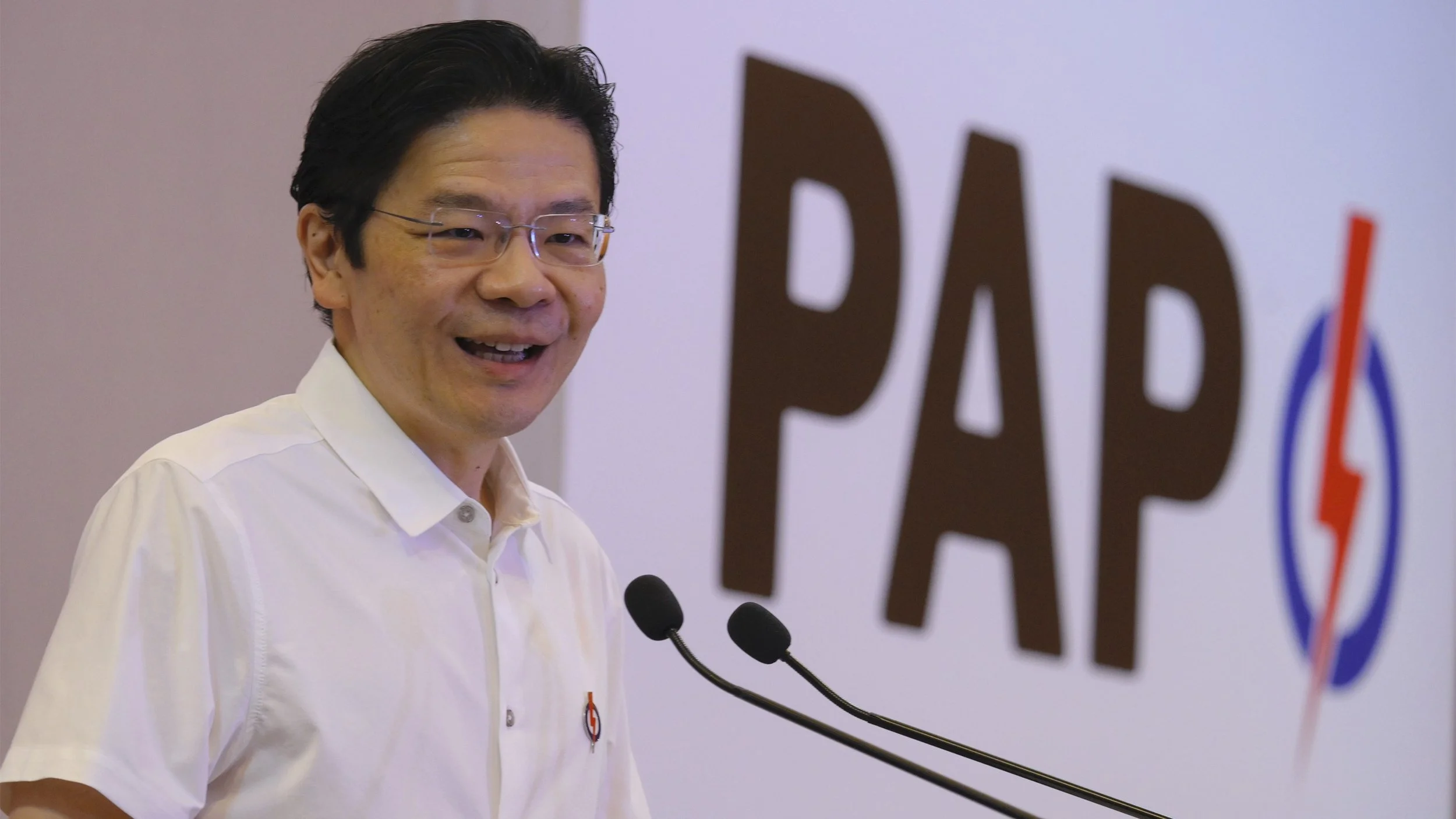
Semantics aside, most observers, including even PAP activists,[3] were likely surprised at how well the PAP performed. After all, Lawrence Wong improved the party’s vote share in his first election as prime minister, something not achieved by any of his predecessors.
In the weeks since, many commentators have attempted to explain the surprise outcome, ranging from a “flight to familiarity” to a vote for “stability” and “continuity.” In this piece, I attempt to engage with some of these explanations and tread some new ground in the post-GE2025 analysis, specifically by examining differences across constituencies and opposition parties.
Some commentators, such as Dr Gillian Koh, Senior Research Fellow at the Institute of Policy Studies, have attributed the PAP’s strong showing to a “flight to safety” effect amidst economic uncertainty caused by the Trump tariffs.[4] These commentators highlight how incumbents in Australia and Canada consolidated support under similar conditions.
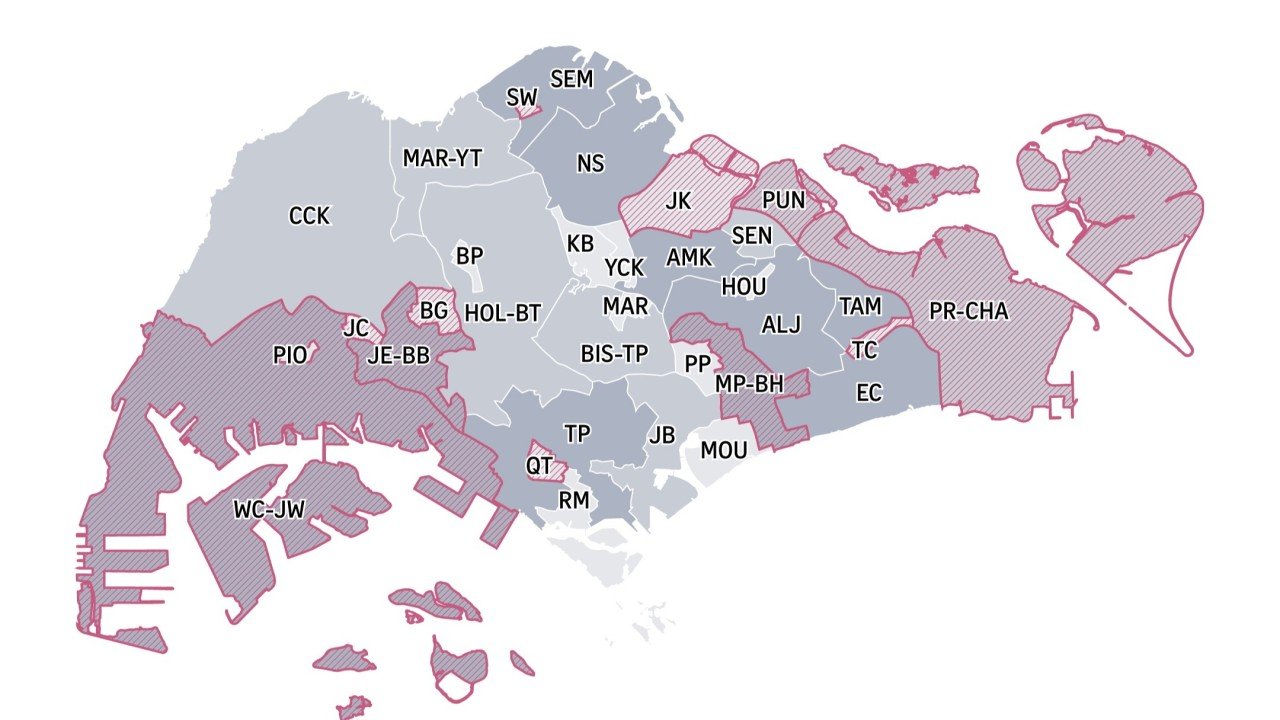
While such concerns likely weighed on voters’ minds, they are unlikely to be the main explanation for the PAP’s performance. Although GE2020 was held amidst a far more uncertain Covid-19 pandemic, there was no evidence of such an effect. Moreover, the “flight to safety” effect cannot explain the huge variation in performance across parties and constituencies, which for the PAP ranged from as low as 37.85% in Hougang SMC to as high as 81.13% in Queenstown SMC.
The comparison to Australia and Canada also has limited explanatory power, given the different circumstances. In these countries, voters may have feared conservative opposition parties coming into power and implementing Trump-like policies. For example, Pierre Poilievre, leader of the Conservative Party in Canada, has a very similar style to Trump, even using the slogan “Canada First.”[5]
However, this is a highly implausible scenario in Singapore, as the PAP would almost certainly have formed the government again, and there is no equivalent of a major Trump-like (or lite) conservative party in Singapore’s political scene. The fear of the PAP not forming the government might have resonated with voters in the 1980s back when Lee Kuan Yew used to warn of a “freak election,” but today, a more mature electorate is unlikely to buy into that message.
A “Discerning” Electorate?
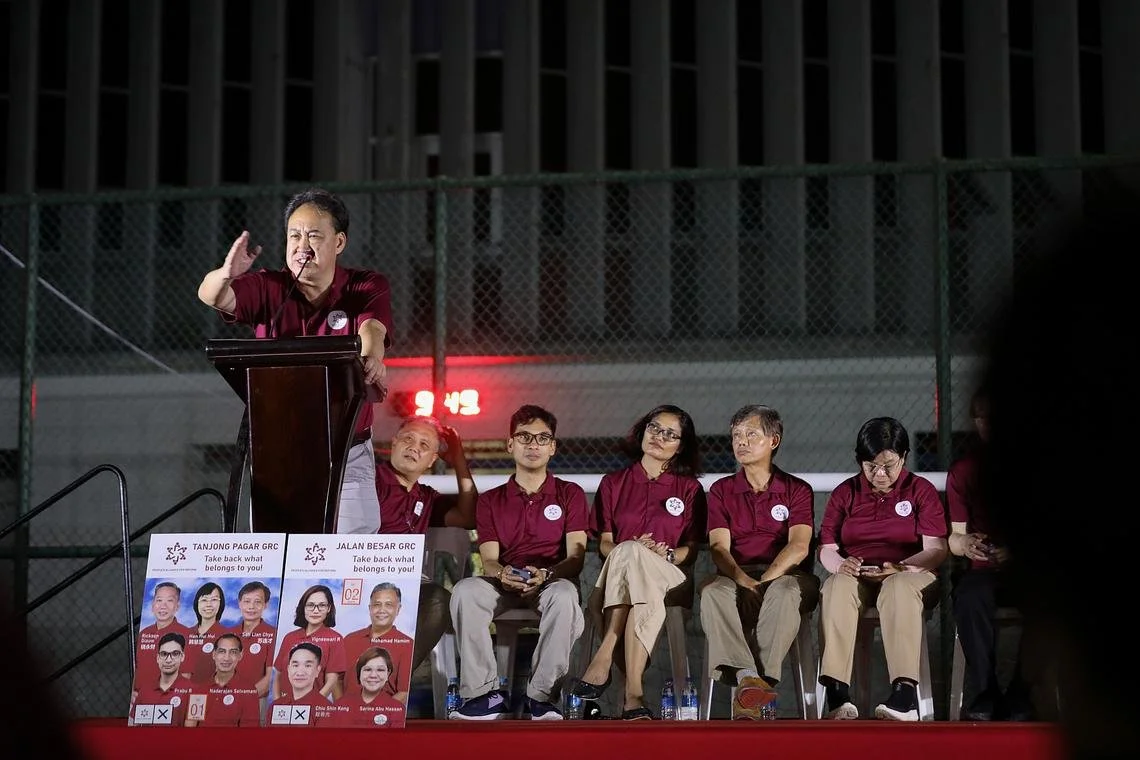
Other commentators have highlighted how “a more sophisticated and discerning electorate” has rejected non-serious opposition parties.[6] The large disparity in vote shares across opposition parties has been interpreted as a sign of a more discerning electorate.
After all, “less credible” parties – those who engage in little groundwork and fail to offer robust policy ideas – performed very poorly this election, even more so than the PAP’s national vote share of 65.57% might suggest. The fact that smaller parties were still horse-trading over which constituencies to contest just days before the election also meant that they had even less time to walk the ground.
The PAP scored a record-breaking 80% in two SMCs and one GRC, which exceeds its best GE2020 performance of 74.62% in now-President Tharman’s Jurong GRC. Furthermore, a record number of 27 candidates lost their election deposits.
These numbers point to an interesting phenomenon in GE2025 – that some of the usual 25% of hardcore opposition voters were even appearing to vote for the PAP instead of “mosquito parties,” a term coined somewhat presciently by former journalist Bertha Henson.
Workers’ Party (WP)
50.06%
Singapore Democratic Party (SDP)
30.88%
People’s Alliance for Reform (PAR)
19.08%
National Solidarity Party (NSP)
1.19%
The large differences in vote share across opposition parties in their contested seats reflect a high sensitivity amongst Singaporean voters towards political parties.[7]
I hesitate to use the term “discerning electorate,” as it implies other electorates are not, which can be weaponised to discredit election outcomes elsewhere, as seen in reactions to Trump’s election in the US. That said, the broader point holds: Singaporean voters increasingly appear to be favouring candidates who not only have good municipal and policy ideas, but can also express them eloquently.[8]
Apart from avoiding mosquito parties, the GE2025 results reveal that voters do not wish to give “free passes” to credible opposition parties like the WP as well, which was also one of the PAP’s campaign messages. Voters appear to be looking not only for credible parties, but also for candidates they perceive to be credible to be fielded in their constituencies.
East Coast GRC is an instructive example. The WP was widely perceived to have fielded its weakest team in East Coast GRC, because it did not field any of its “star catches” in the GRC, such as Senior Counsel Harpreet Singh and ex-IMH director Ong Lue Ping.
This perception was reflected in the results. Despite being one of the closest contests in GE2020, and with DPM Heng Swee Keat stepping down as anchor minister, East Coast GRC saw the WP’s weakest result. The WP secured a vote share of 41.24%, essentially its “baseline” vote, which was a swing of over five percentage points against the WP.
These results should be viewed in the context of the national swing towards the PAP and the redrawing of electoral boundaries just over a month before the election. The WP team had also fielded candidates with prior electoral experience, including former NCMP Yee Jenn Jong and Marine Parade GRC candidate Nathaniel Koh. Nevertheless, the outcome reflects voters’ growing demand for perceived star power and credibility in candidates.
Even credibility, on its own, may not be enough. It must be accompanied by sufficient groundwork, and in turn, what “sufficient” constitutes depends on the incumbent’s level of groundwork. This can be seen in the case of Bukit Panjang SMC. Dr Paul Tambyah, Chairman of the SDP, attained a vote share of 46.26% in GE2020, and was widely expected to either maintain or increase his vote share.
Yet, Tambyah saw a dip in his vote share of almost eight percentage points, attaining 38.59% of the total votes. Indeed, some political commentators, such as NTU’s Associate Professor Walid Jumblatt Abdullah, attributed this to the significant ground presence of incumbent MP, Liang Eng Hwa.[9] While Liang was new to Bukit Panjang last election, in the past five years, he launched meaningful community initiatives such as $1 meals. Anecdotal evidence suggests that Liang was on the ground 3-4 times a week, compared to 1-2 times a week for Tambyah.[10]
Navigating the Line of Negative Politics
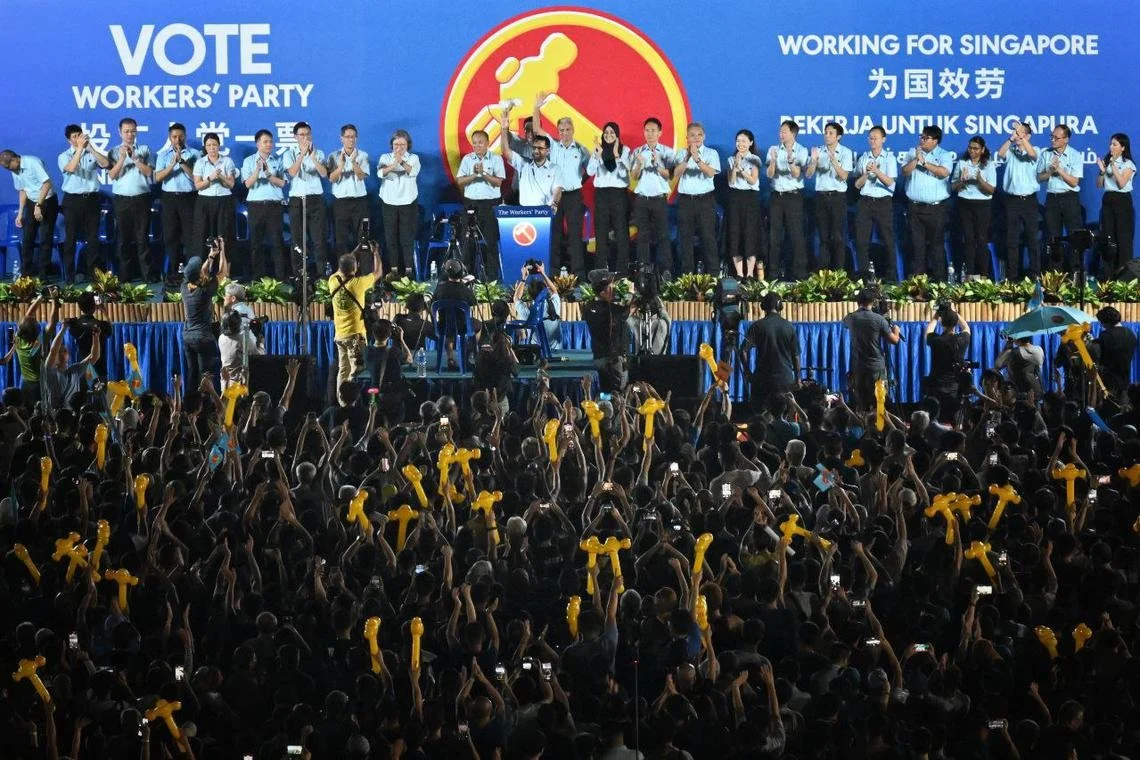
I now turn to campaigning strategies, specifically, the allegations that parties – mostly the PAP and the WP – engaged in “negative politics.”
To the PAP’s credit, and as many observers have noted, it ran a relatively clean campaign, avoiding personal attacks – a marked contrast to GE2020. Most notably, it did not raise the ongoing court case against Leader of the Opposition Pritam Singh for lying under oath.
Compare this to GE2020, when the PAP questioned Raeesah Khan’s fitness to be an MP, given her past Facebook comments that made derogatory comments towards certain races and religions. While Khan’s eventual lying scandal and resignation might have proven the PAP correct in the end, its aggressive approach had backfired in GE2020, as the PAP lost Sengkang GRC that election and subsequently failed to reclaim it.
This was likely a coordinated party strategy to avoid “gutter politics,” as revealed by PAP insiders after the election,[11] and the results seem to have proven its success. Still, not every PAP candidate stuck to the script.
On the second day of campaigning, Health Minister Ong Ye Kung accused SDP Secretary-General Chee Soon Juan of “abandoning” the voters of Bukit Batok SMC, and implied that the SDP was being dishonest with the voters of Sembawang.[12]
This sparked a wave of rebuttals by the SDP, who were quick to highlight the irony in his statement, given that the PAP itself had swapped ministers Gan Kim Yong and Tan See Leng on Nomination Day. Ong himself had also moved from Aljunied GRC after his defeat in GE2011.
Likewise, candidate for Sembawang West SMC, Poh Li San, also took aim at how Chee’s “passion alone does not build playgrounds nor support seniors nor comfort a struggling family.”[13]
Eventually, the Sembawang GRC led by Ong polled 67.75% of the vote, only a marginal improvement of half a percentage point from GE2020. Meanwhile, Poh barely retained her seat against Chee with 53.19% of the vote.
While Ong’s result was slightly above the PAP’s national average of 65.57%, it fell short of the PAP’s average vote share of 72.30% in non-WP-contested constituencies. The PAP’s performance in Sembawang, was thus perhaps not as high as Ong would have liked. While correlation does not imply causation, one factor behind the PAP’s less-than-ideal performance in Sembawang may have been its deviation from the overall campaigning strategy.
PAP’s National Vote Share
65.57%
PAP’s vote share in non-WP-contested constituencies
72.30%
PAP’s vote share in WP-contested constituencies
49.83%
The WP, on the other hand, was accused by PM Lawrence Wong of making “negative attacks” against DPM Gan Kim Yong, “someone who is spending so much time tackling national issues.”[14] This characterisation stemmed from the comments made by WP candidates during their Punggol GRC rally. Almost all the Punggol GRC candidates, as well as WP Secretary-General Pritam Singh, questioned DPM Gan’s move to Punggol.
Alexis Dang, in a comment almost straight out of r/Singapore, questioned if Minister of State Sun Xueling’s comment from the previous night that “we do not need strangers to come to Punggol” was referring to DPM Gan. Singh, in turn, questioned how indispensable DPM Gan was, given that he was moved from a safe ward in Chua Chu Kang GRC to the hotspot of Punggol GRC.
None of the WP candidates directly questioned DPM Gan’s work or character. Singh’s argument also seems to make logical sense – the PAP took a risk by placing DPM Gan in Punggol GRC, which would imply he is not “indispensable.” However, in politics, sometimes perception matters more than reality.
By approaching what could be construed as negative campaigning, especially in repeatedly targeting DPM Gan, the face of Singapore’s Covid-19 response and upcoming tariff negotiations with the US, the WP might have inadvertently turned off some moderate voters. This likely did not have a huge impact on the vote share. Nevertheless, in PAP-WP contests, tight margins mean that every vote counts.
This could thus perhaps be one factor in the WP’s eventual performance in Punggol GRC, where it fell just short of 45%, despite fielding arguably its strongest new candidate, Harpreet Singh, in the GRC.
Identity Politics in Play?
Some may have also perceived the WP to be operating on the edge of identity politics during the campaign. The first sign was its decision to move incumbent Aljunied GRC MP Faisal Manap to Tampines GRC in a contest against the Minister-in-charge of Muslim Affairs, Masagos Zulkifli.
The move may have sought to tap into discontent among Malay-Muslim voters, especially regarding perceptions of Masagos’ delayed response to Calvin Cheng’s comments to send pro-Palestine activists on a “one-way ticket” to Gaza. Malays are estimated to comprise 23.6% of voters in Tampines GRC, roughly 10 percentage points above the national average.[15]
Furthermore, the WP, in a departure from its usual alignment with the PAP on foreign policy issues, also stated in its manifesto that Singapore should recognise Palestine as a state even before a two-state solution was negotiated, an issue that many Muslims, in particular, are concerned about.
However, this move may have inadvertently backfired on the WP. Members of PAS, a Muslim political party in Malaysia, came out in support of the WP, constituting foreign interference. Similarly, a Singaporean self-styled religious teacher, Noor Deros, also claimed to have spoken to all Malay-Muslim candidates in the WP and had urged the WP to raise issues regarding the Malay-Muslim community in Parliament.[16]
To the WP’s credit, it swiftly responded to these developments. Singh clarified that the party could not control endorsements by foreign parties, and for Noor, the party had not been aware that he would be joining their meeting with other mosque leaders, and that they had not made any promises or commitments to him.[17]
Perhaps the party’s response could have been even stronger if Faisal had directly rejected such endorsements, beyond his declaration that he would serve all Singaporeans, regardless of race, language and religion.[18] Nevertheless, some Singaporeans could have felt uncomfortable at how these incidents appeared to blur the line between religion and politics.
Another factor in Tampines GRC could have been the lack of a “Jamus Lim” GE2020 moment. While Michael Thng performed credibly during the roundtable, the format – widely criticised online for not allowing participants to engage each other – unfortunately gave him little opportunity to deliver another memorable soundbite like “no blank cheque.”
The WP’s Tampines team – arguably its strongest non-incumbent slate – ultimately fell just short with 47.37% of the vote. Nevertheless, this was an extremely commendable performance: the WP managed to swing 14.39% of the vote, despite this being the party’s first foray into Tampines. The WP’s efforts were rewarded with an NCMP seat, which marginally increases its parliamentary presence.
None of this is to suggest that either the PAP or WP ran poor overall campaigns; after all, hindsight is always 20/20. On the contrary, a post-election survey by Blackbox found that voters rated both parties’ campaign performances positively.[19] Still, tactical decisions at the constituency level may well have tipped the balance.
Moving Forward
In GE2025, the electorate has clearly demonstrated a keener scrutiny of parties’ proposals and candidates. In this regard, the WP has pulled ahead of the rest of the opposition parties. To shed the label of “mosquito party” and improve in the next election, opposition parties will have to re-examine their strategies over the next five years.
That said, it must be acknowledged that the playing field remains uneven for the opposition. For example, the Writ of Election was issued less than a month after the release of electoral boundaries, disadvantaging small opposition parties with fewer resources.
But I remain hopeful that this situation may change soon. PM Lawrence Wong has expressed willingness to “make adjustments” to the government’s policies regarding the People’s Association, which many see as structurally favouring the PAP.[20] If such an openness is also extended to electoral rules, then we could see a more balanced playing field in future elections.
Notes
[1] Bhavan Jaipragas, “Inside the PAP’s GE2025 Playbook – and Why Rivals Should Take Notes,” The Straits Times, May 8, 2025, https://www.straitstimes.com/opinion/inside-the-paps-ge2025-playbook-and-why-rivals-should-take-notes.
[2] “GE2025: Our Morning After Webinar Analyses the PAP’s Victory,” Academia | SG (blog), May 4, 2025, https://www.academia.sg/academic-views/ge2025-our-morning-after-webinar-analyses-the-paps-victory/.
[3] Taufiq Zalizan, “GE2025: The Secrets to PAP’s Electoral Success through the Eyes of Party Insiders,” Channel NewsAsia, May 9, 2025, https://www.channelnewsasia.com/today/big-read/ge2025-keeping-quiet-playing-nice-pap-5118971.
[4] Xinghui Kok and Jun Yuan Yong, “Singapore’s Ruling Party Extends Monopoly with Decisive Election Win,” Reuters, May 3, 2025, sec. Asia Pacific, https://www.reuters.com/world/asia-pacific/singapore-votes-test-ruling-partys-monopoly-2025-05-03/.
[5] Catherine Kim, “The Canadian Leader Who Can’t Escape Trump’s Shadow,” POLITICO, May 23, 2025, https://www.politico.com/newsletters/politico-nightly/2025/04/10/the-canadian-leader-who-cant-escape-trumps-shadow-00285624.
[6] Li Ying Lee et al., “GE2025: With a More Discerning Electorate, Smaller Opposition Parties Face an Uncertain Future,” The Straits Times, May 10, 2025, https://www.straitstimes.com/singapore/ge2025-with-a-more-discerning-electorate-smaller-opposition-parties-face-an-uncertain-future.
[7] Lee et al.
[8] “Blackbox Research — GE2025: How the PAP Clinched a Convincing Win - And What the Data Tells Us,” Blackbox Research, May 5, 2025, https://www.blackbox.com.sg/perspectives/ge2025-how-the-pap-clinched-a-convincing-win-and-what-the-data-tells-us.
[9] “Morning After.”
[10] “Did Social Media Get GE2025 Right?,” The Hot Seat: Did Social Media Overhype Expectations for Change in GE2025? (Money FM 89.3, May 9, 2025), https://www.youtube.com/shorts/y6vPyEpgIO8.
[11] Zalizan, “The Secrets to PAP’s Electoral Success through the Eyes of Party Insiders.”
[12] Shermaine Ang, “GE2025: Vote for Poh Li San to Stay in Sembawang Family, and for Chee Soon Juan to Be out, Says Ong Ye Kung,” The Straits Times, April 24, 2025, https://www.straitstimes.com/singapore/politics/ge2025-vote-for-poh-li-san-to-stay-in-sembawang-family-and-for-chee-soon-juan-to-be-out-says-ong-ye.
[13] Zaihan Mohamed Yusof and Hong Yi Tay, “GE2025: SDP’s Chee Has Walked Long Political Path, but Not Served the Community, Says PAP’s Poh Li San,” The Straits Times, April 29, 2025, https://www.straitstimes.com/singapore/politics/ge2025-dr-chee-has-walked-long-political-path-but-not-one-spent-serving-community-says-poh-li-san.
[14] Zhaki Abdullah and Keng Gene Ng, “GE2025: WP Taking ‘Cavalier and Irresponsible Approach towards Livelihood of S’Poreans’, Says PM Wong,” The Straits Times, April 29, 2025, https://www.straitstimes.com/singapore/politics/ge2025-wp-taking-cavalier-and-irresponsible-approach-towards-livelihood-of-sporeans-says-pm-wong.
[15] David Sun and Aqil Hamzah, “Election Spotlight: Race Hots up in Tampines as Multi-Cornered Fights Loom,” The Straits Times, April 3, 2025, https://www.straitstimes.com/singapore/politics/election-spotlight-race-heats-up-in-tampines-as-possible-4-way-fight-looms.
[16] Hariz Baharudin, “Religious Teacher Says He Had Talks with WP, Urged Party to Prioritise Rights of Malay/Muslim Community,” The Straits Times, April 26, 2025, https://www.straitstimes.com/singapore/politics/spore-religious-teacher-says-he-had-talks-with-wp-urged-party-to-prioritise-rights-of-malaymuslim.
[17] “GE2025: WP Says It Has No Control over Foreigners Supporting Its Candidates after Authorities Flag Foreign Attempts to Influence Election,” Channel NewsAsia, April 26, 2025, https://www.channelnewsasia.com/singapore/workers-party-foreign-interference-mha-eld-5090736.
[18] Janice Lim, “Singapore Election 2025: WP Candidates Represent All Singaporeans, Not Just Their Communities: Pritam Singh,” The Business Times, April 26, 2025, https://www.businesstimes.com.sg/singapore/ge2025-wp-candidates-represent-all-singaporeans-not-just-their-communities-pritam-singh.
[19] “Blackbox Research — GE2025.”
[20] Keng Gene Ng and Shermaine Ang, “GE2025: PAP’s Approach on Difficult Issues Is to Bring All Singaporeans Together, Says PM Wong,” The Straits Times, April 30, 2025, https://www.straitstimes.com/singapore/politics/ge2025-paps-approach-on-difficult-issues-is-to-bring-all-singaporeans-together-says-pm-wong.