
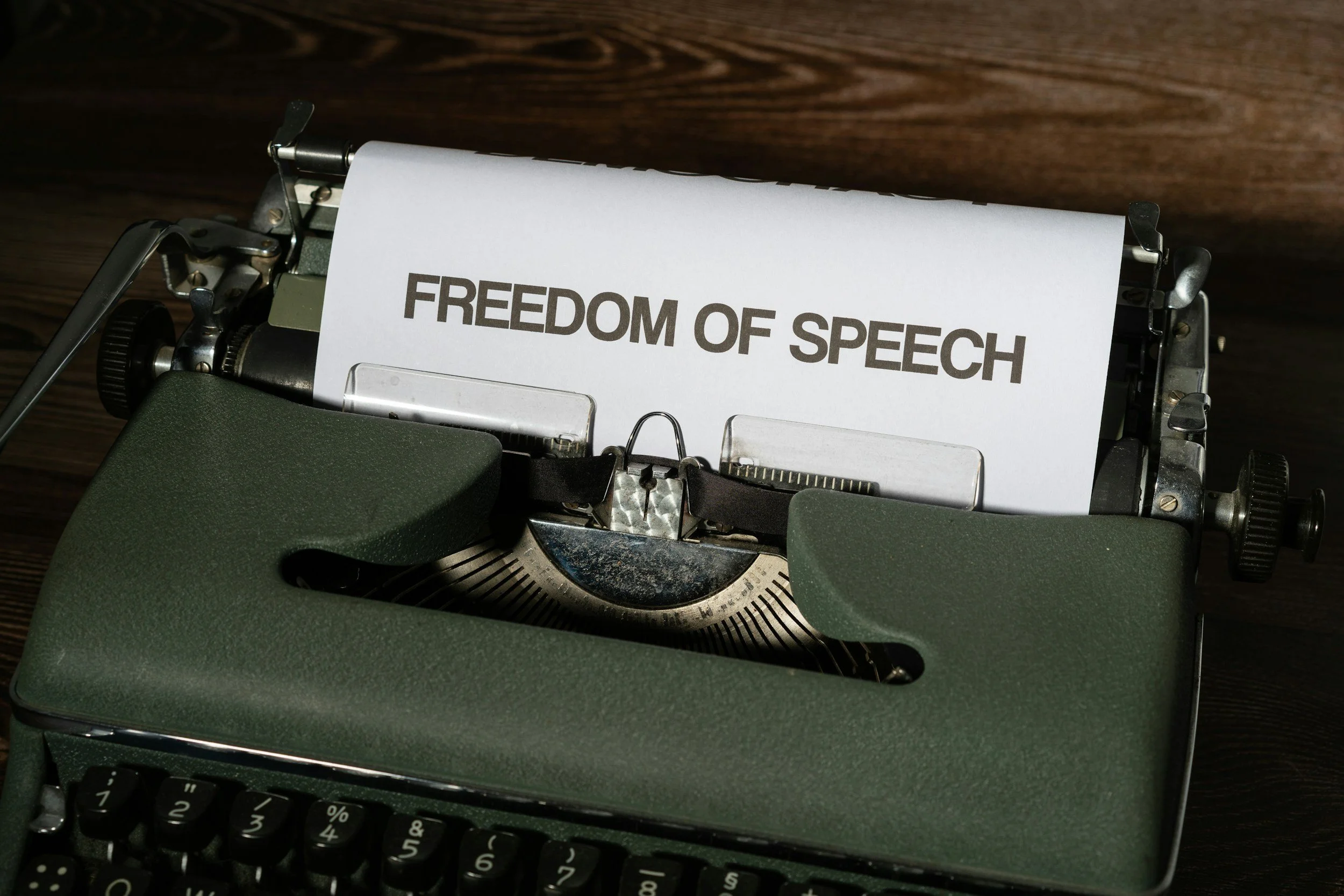
Why Less Restriction on Speech May Be Undesirable Today
By Zuo Yuning
Edited by Lavanya Aggarwal
Anyone remotely interested in politics has probably heard of free speech, an idea closely associated with democracy, and often seen as inalienable in democratic societies. Yet, modern-day discussion surrounding free speech has become increasingly uncomfortable because it seems like loosening speech restrictions often helps hateful or false information more than constructive civil discourse. Our impression, I believe, guides us to many ways in which modern conditions have come to challenge many conditions that constructive discourse relies on and complicate the applicability of many of free speech’s intrinsic values that many of us believe in.
Canonical Understanding of Free Speech
Let us take a step back and ask, what are the canonical ideals for free speech? In traditional social liberal theories, free speech is widely regarded as both an instrumental good for social progress and intrinsically as an affirmation of our human dignity. To paraphrase John Stuart Mill, a canonical liberal political thinker, suppressing free speech may silence the truth, and importantly, even if an opinion is false, its confrontation with truth forces society to justify and refine their beliefs, rather than accept opinions as a mere “dead dogma”1. This aspect is believed to be one of the cornerstones of effective civil discourse and democratic self-rule. At the same time, the intrinsic value of free speech, be it as an expression of the equality of citizens, a form of respect for human dignity, or something else, has been widely reaffirmed by thinkers of many eras, such as John Dewey on democratic communication, Ronald Dworkin on individual rights and Jürgen Habermas on rational discourse.
However, traditional conceptions have been coming under an increasing strain in light of modern conditions. Let us take a closer look as to how this makes it increasingly difficult to have constructive, meaningful discourse.
Instrumental Benefit of Free Speech
Consider the purported instrumental value of free speech — the argument that free speech promotes truth. That argument relies heavily on the premise that individuals shared a common reality, where people can agree on most of the basic information. However, the issue at hand is that social media algorithm has perpetuating self-reinforcing echo chambers where exposure to evidence which contradicts to an individual’s opinions is significantly reduced, even consciously avoided2. This in many cases may contribute to a sense of "alternative reality” between people.
How is this an issue, you may ask? Let’s think through an example. If one of your close friends is an open minded individual, convincing them to attend your birthday celebration should be relatively easy, right? It is normally assumed and generally true that your friend will have a similar understanding of the purpose and significance of a birthday celebration. Now imagine the relative difficulty performing this same task if, for years, your friend had been exposed to online material propagating ideologies such as “burning candles cause cancer” or “celebrating birthdays activates evil spirits”? Not only does your friend vehemently turn down your invitation, but they may also urge you to stop celebrating your birthdays altogether. It would be nearly impossible to have a rational discussion on this topic because no matter what evidence you present, it will likely be drowned out by the overwhelming streams of falsehoods constantly flooding your friend’s social media account.
Apply this example to important issues — abortion, healthcare, tax policy — and it reveals how it can destroy constructive discourse.
In the modern age, when people say they want more free speech, there can be at least two different, though interconnected, motivations. The first is the (widely shared) desire to protect individuals from unwarranted persecution (where what counts as “unwarranted” is often debated across different contexts). The second is a desire for information to circulate freely, allowing truth to emerge through open contestation and not external control. It's this second motivation which seems more problematic in today’s digital media landscape, where relaxing content regulation often turns out to supercharge the spread of rather undesirable speech — content that is sensational, inaccurate or straight up false. This is attributed to the superior virality of misinformation compared to truth, as it exploits common human cognitive biases and captures attention with its simplicity, emotional salience and so on3. Hence, with less restrictions, falsehoods may end up gaining more traction as truth competes on virality, rather than merit. Referencing the birthday example, we can see how more free speech, in such an environment, may undermine the foundation of meaningful political discourse, rather than promoting social good.
Applicability of the Intrinsic Value of Free Speech
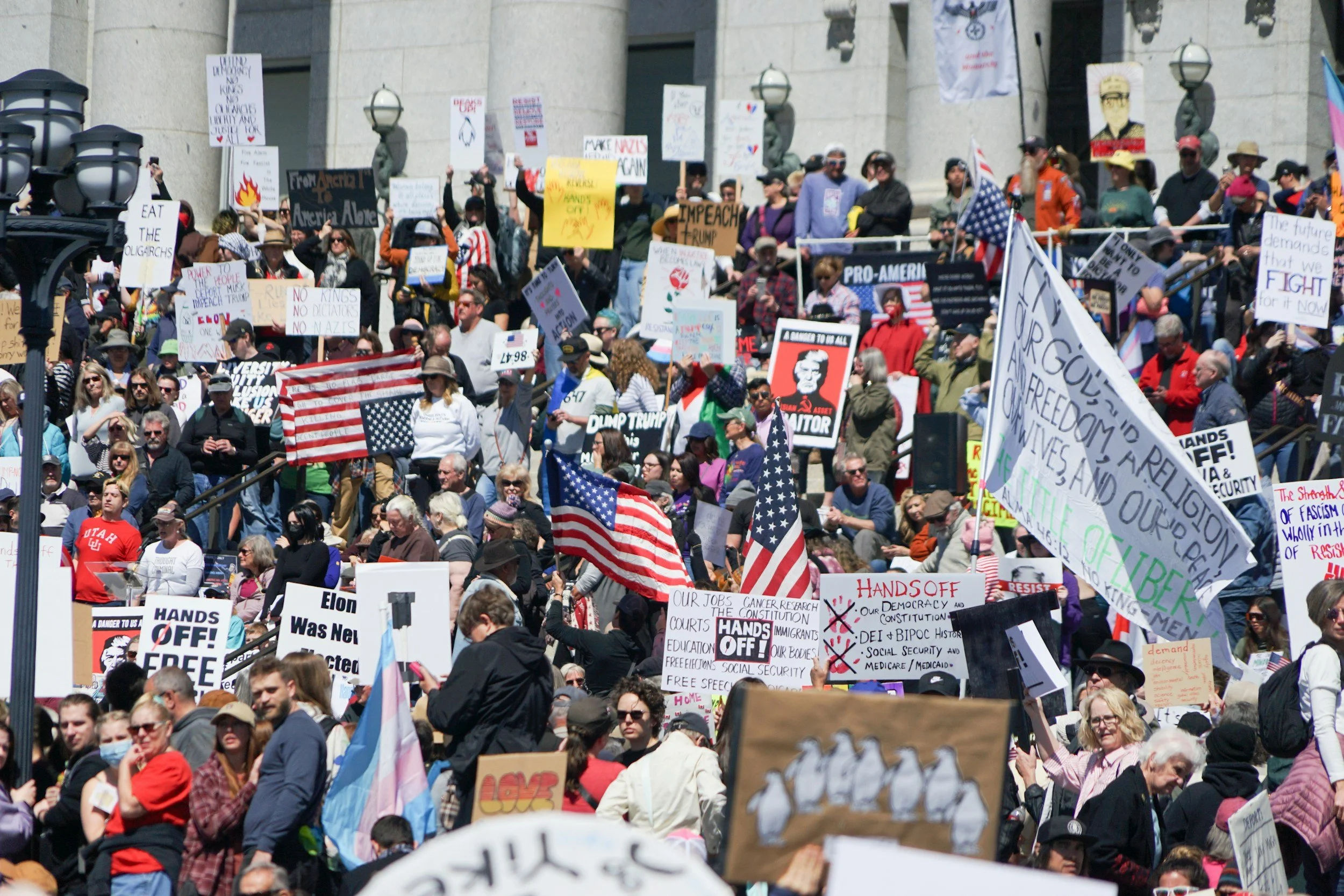
“But Yuning, even if you say fewer restrictions on speech is no longer instrumentally good nowadays, I still believe people should have the human dignity to express their opinions without restrictions or persecution!” This sentiment ties back to our desire to protect people from being prosecuted for their speech acts. While I believe the general idea of free speech is widely accepted as a democratic norm, we need to more carefully consider who deserves this protection, and whether everyone deserves it equally. Does someone who spreads falsehoods for monetary reasons deserves the same rights as an honest journalist? Should someone who sells "alternative medicines” deserve the same rights as a disease control specialist when discussing health? Does a Russian bot account on social media deserve the same rights as the official BBC account? Most of us would not respond to these questions with a resounding “Yes!” (and for those who would, it might be worth reflecting on whether they treat their closest friends the same way they treat random strangers on the streets). In many cases this distinction can be difficult to delineate, but our more extreme comparisons do reveal the need for distinctions to be made, no matter how difficult. That is sufficient to me; we need to be careful of whose speech to protect.
Not all kinds of speech deserve the same treatment as well. In terms of consequences, some forms of speech can move people — inspiring prosocial actions or cultivating virtues — while others, like anti-vaxx claims, can literally cost lives. In terms of intentions, while many people share things (online or offline) with neutral to good intentions, many may deliberately lie to serve personal interests or push a political agenda. This distinction is significant to me regardless of how well informed the speaker is or what the consequences are. For example, an anti-vaxx mother warning her children against vaccines is fundamentally different from a politician pushing that falsehood, knowing it is untrue. It is the similar principle at play when, assuming the consequences are the same, we tend to forgive a deceived person more easily than an intentional liar.
Real-life Instances where Online Speech Regulation is Relaxed
When restrictions are reduced, we are quite often reducing those that have been specifically put in place with the aim of mitigating the spread of information like fact-checking, content moderation and so on. This information could be undesirable for its content, origins, consequences, and/or its intentions. This is evidenced by the spike in hate speech and bot misinformation on X (formerly Twitter) after Elon Musk’s acquisition and subsequent reduction in moderation by the self-proclaimed “free speech absolutist”4. Truths hardly benefit from this kind of “free speech” because, as mentioned earlier, misinformation tends to spread more rapidly in today’s media landscape.

The Right Way to Regulate Modern Online Speech: My View
By now, I like to believe it is clear to most of us that the traditional framework of justifying free speech is seriously strained. That said, the fault does not lie with those great thinkers who have consistently defended free speech. In any case, they probably could have never imagined the advent of an Internet that prioritises misinformation over truths with a bloodless algorithm. They also could not have imagined how significantly this algorithm has challenged the role of institutions and the media as gatekeepers of information. 5
To clarify, most of us, including myself, still want most people to have the room and space to practise constructive speech without fear of persecution. How, then, should we regulate speech? After all, many would be justifiably worried of politically motivated authoritarian speech regulation, another extreme that we do not want to fall into.
In my view, we should distinguish who is speaking and how their speech operates in the information ecosystem and then apply narrow, evidence-based, and procedurally safeguarded interventions proportionate to likely harm, not blanket censorship. Concretely, speakers with amplifying power (e.g. politicians, media outlets, large platform accounts) should face stricter standards because their assertions have systemic reach and can change public behaviour at scale; private individuals or small-audience speakers who sincerely hold false beliefs should usually be met with counter-speech, education, or contextual labels rather than removal. Decision-making must not rest solely with the state, which risks authoritarian capture, nor entirely with opaque platform algorithms. Instead, it should be multi-stakeholder: platforms operate transparent takedown/label rules audited regularly by independent oversight bodies, subject to judicial review and statutory constraints that require narrowness, proportionality, and sunset clauses. To guard against the “slippery slope” concern many may have, every restriction should be justified by a demonstrable imminent public-harm criterion (e.g., likely to cause preventable deaths or coordinated electoral disruption), limited in scope and time and reviewable and reversible. Those features distinguish democratic, rule-governed moderation from authoritarian repression (which is opaque, unlimited, and unreviewable). In ambiguous cases — the sincerely mistaken parent versus the politician who repeats debunked falsehoods — the principle is twofold: assess intent and expected externalities (did the speaker know, or recklessly disregard, the falsity, and how many will act on the claim?) and prefer remedial measures (labels, de-boosting, compulsory corrections, targeted strikes against coordinated networks) for high-reach actors while prioritising education and corrective amplification for sincere but low-reach actors. Finally, because no system is error-free, the design must emphasise public justification, empirical evaluation, and periodic democratic review so that the polity — not a ruler or a single firm — remains the ultimate arbiter of permissible limits on speech.
I have little confidence that we can achieve such a nuanced policy any time soon, but then I recall that having the idea of and hope for a positive outcome is often a self-fulfilling prophecy. So, let us hope, for the sake of constructive free speech.
References:
Hickey, Daniel, Matheus Schmitz, Daniel Fessler, Paul E. Smaldino, Goran Muric, and Keith Burghardt. “Auditing Elon Musk’s Impact on Hate Speech and Bots.” Proceedings of the International AAAI Conference on Web and Social Media 17 (June 2023): 1133–37. https://doi.org/10.1609/icwsm.v17i1.22222.
Mill, John Stuart. “On Liberty.” In A Selection of His Works, by John Stuart Mill, edited by John M. Robson. Macmillan Education UK, 1966. https://doi.org/10.1007/978-1-349-81780-1_1.
Nguyen, C. Thi. “ECHO CHAMBERS AND EPISTEMIC BUBBLES.” Episteme 17, no. 2 (2020): 141–61. https://doi.org/10.1017/epi.2018.32.
Van Der Linden, Sander. “Misinformation: Susceptibility, Spread, and Interventions to Immunize the Public.” Nature Medicine 28, no. 3 (2022): 460–67. https://doi.org/10.1038/s41591-022-01713-6.
Wallace, Julian. “Modelling Contemporary Gatekeeping: The Rise of Individuals, Algorithms and Platforms in Digital News Dissemination.” Digital Journalism 6, no. 3 (2018): 274–93. https://doi.org/10.1080/21670811.2017.1343648.